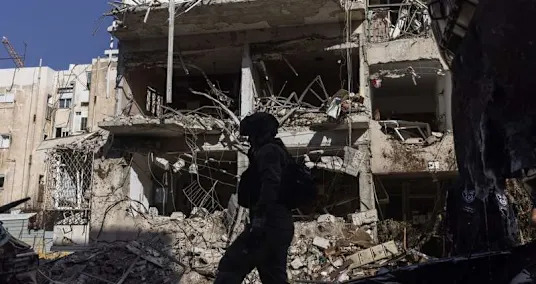
According to the IDF, Wednesday’s strikes also targeted Hamas infrastructure and operatives across several sites in Gaza.
Abdallah Abu Shamala, head of Hamas’s Navy in Gaza, and Fadi Abu Mustafa, a senior tunnel engineer in the Khan Yunis Brigade, were killed during IDF strikes on Wednesday, the military confirmed in a joint statement with the Shin Bet (Israel Security Agency) on Thursday.
The operation followed Hamas’s violation of the ceasefire agreement and was guided by joint intelligence. According to the IDF and ISA, Abu Mustafa also took part in holding hostages captive, including Nimrod Cohen and David Cunio.
Abu Shamala advanced attacks against Israeli forces and maritime targets throughout the war, according to the IDF.
According to the IDF, Wednesday’s strikes also targeted Hamas infrastructure and operatives across several sites in Gaza.

Multiple ceasefire violations in Gaza
In recent weeks, Israeli officials and analysts have warned that Hamas is seeking to rebuild and test the ceasefire’s limits. In contrast, Israeli forces have responded to multiple threats and attempts to enter the IDF-controlled 'Yellow Line.'
On Wednesday, Israeli troops stationed behind the Yellow Line found an eight-tubed rocket launcher with four rockets aimed at Israel while clearing the area.
In addition, during a separate operation by the Kfir Brigade, several weapons were found, including Kalashnikov rifles, fragmentation grenades, explosives, magazines, and military uniforms.
LATEST POSTS
- 1
 Eli Lilly weight-loss drug appears to suppress binge-eating signal, small study finds
 - 2Extreme Manual for Picking a Camper Van
- 3The most effective method to Go with Informed Choices on Vehicle Leases
- 4A Gustav Klimt painting is now the most expensive piece of modern art sold at auction. The fascinating history behind the $236 million 'Portrait of Elisabeth Lederer.'
- 5Sustaining Public activity and Connections: Key Methodologies


- The Way to Business: Startup Illustrations Learned
- Well known SUVs With Low Energy Utilization In 2024
- She was the supermodel dubbed 'The Face' in the '80s. Joining OnlyFans in her 60s taught her a lot.
- 10 Moves toward Start Your Own Effective Business
- IDF finds weapon of slain hostage Capt. Daniel Perez in booby-trapped Gaza compound
- IDF uncovers 7 km.-long Gaza terror tunnel where Hamas held Hadar Goldin
- Israeli media reports Iran attacking greater Tel Aviv region
- An Extended time of Careful Nurturing: Individual Bits of knowledge on Bringing up Kids
- What is the Insurrection Act? Can Trump really use the military to 'put an end' to Minneapolis ICE protests?